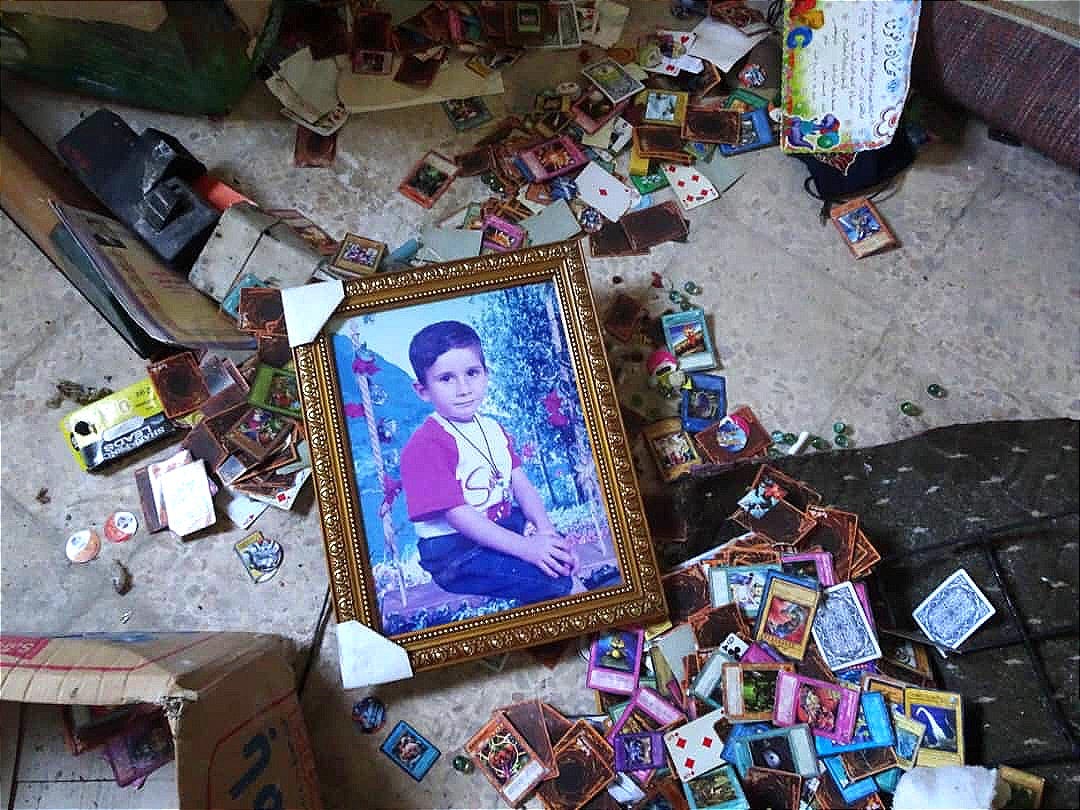
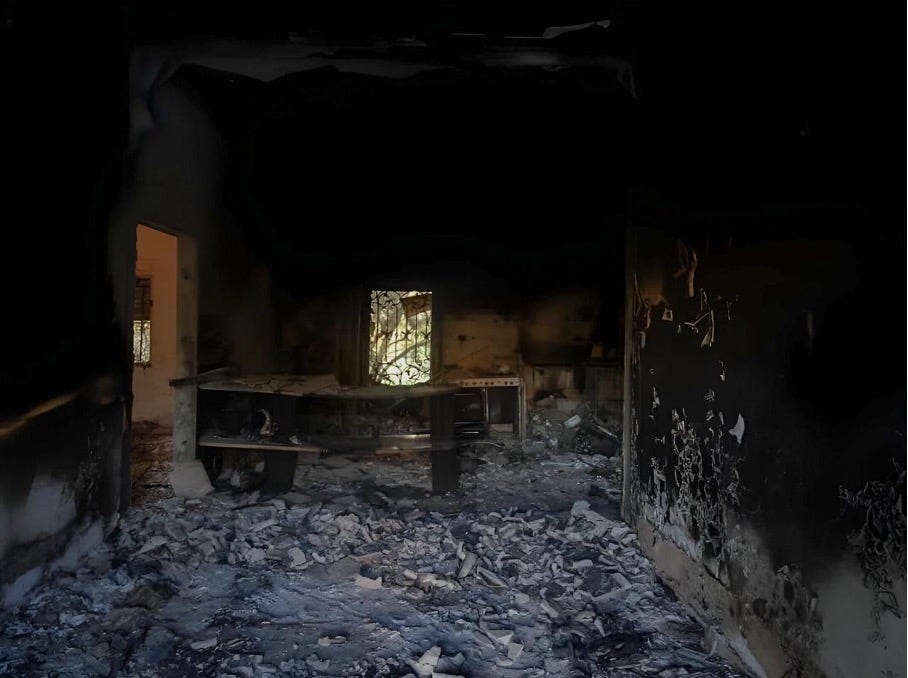
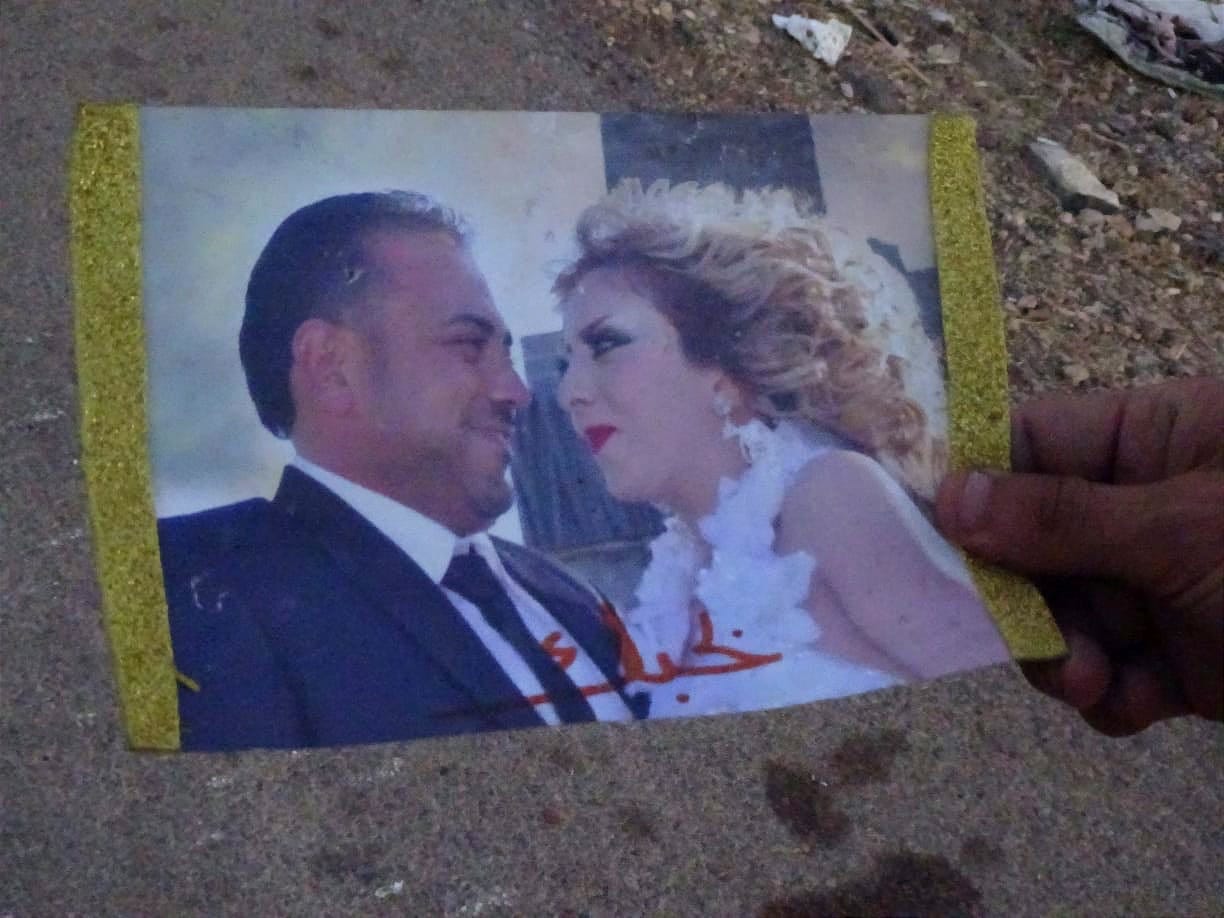
The photograph was taken inside one of the burned and looted houses in an abandoned village in Suwayda. The inhabitants of these villages were displaced, their homes burned and looted, and many were killed during the recent assault on Suwayda. Looters steal everything, except photographs. Photographs are all that remain of those who once lived there.
“Suwayda burns before my eyes. Columns of smoke rise all the way to the eastern hills. I am at the edge of my region, unable to enter. The roads are blocked by security forces. I am terrified of what might be happening to my family, right before my eyes, with nothing I can do.”
— Altair Najim Alsobih
Following the abduction, robbery, and torture of a Druze merchant and the subsequent retaliation by villagers against Bedouin neighborhoods in Suwayda a spiral of vengeance erupted, leaving nearly two thousand dead. This cycle exposed not only the sectarian fractures inherited from the Assad regime, but also the competing interests of the Syrian state, regional powers, and the new strategies of authority to reassert territorial control.
Unable to govern its confessional and territorial peripheries, or to articulate a unifying national project, the new Syrian state delegated part of its authority to Bedouin armed groups—most notably to two major tribal confederations. That delegation quickly backfired, fueling a cycle of tribal and sectarian violence with Suwayda as its epicenter.
Altair is a young man from Suwayda. When we met in January, in Damascus, we shared the euphoria that followed the fall of the dictatorship. A few months later, horror reached his doorstep. His family was trapped in Suwayda, close relatives were killed, and the region was placed under blockade by the new government. Clashes erupted between security forces, armed Bedouin groups, and Druze militias.
Altair, who lives in Damascus and could not endure watching from afar, decided to go to the front line. He posed as a Palestinian, changed his accent, and returned to the outskirts of his home region. He managed to join convoys of General Security forces and Bedouin groups heading toward Druze neighborhoods—the streets of his childhood, just a few blocks away. For several days, he shared their bread and their conversations, photographing what unfolded as he observed, from the inside, the operational logic and the local consequences of this delegation of power.
The quotes below come directly from Altair. The analytical section was written jointly, with the generous and insightful support of Fajawat Media.
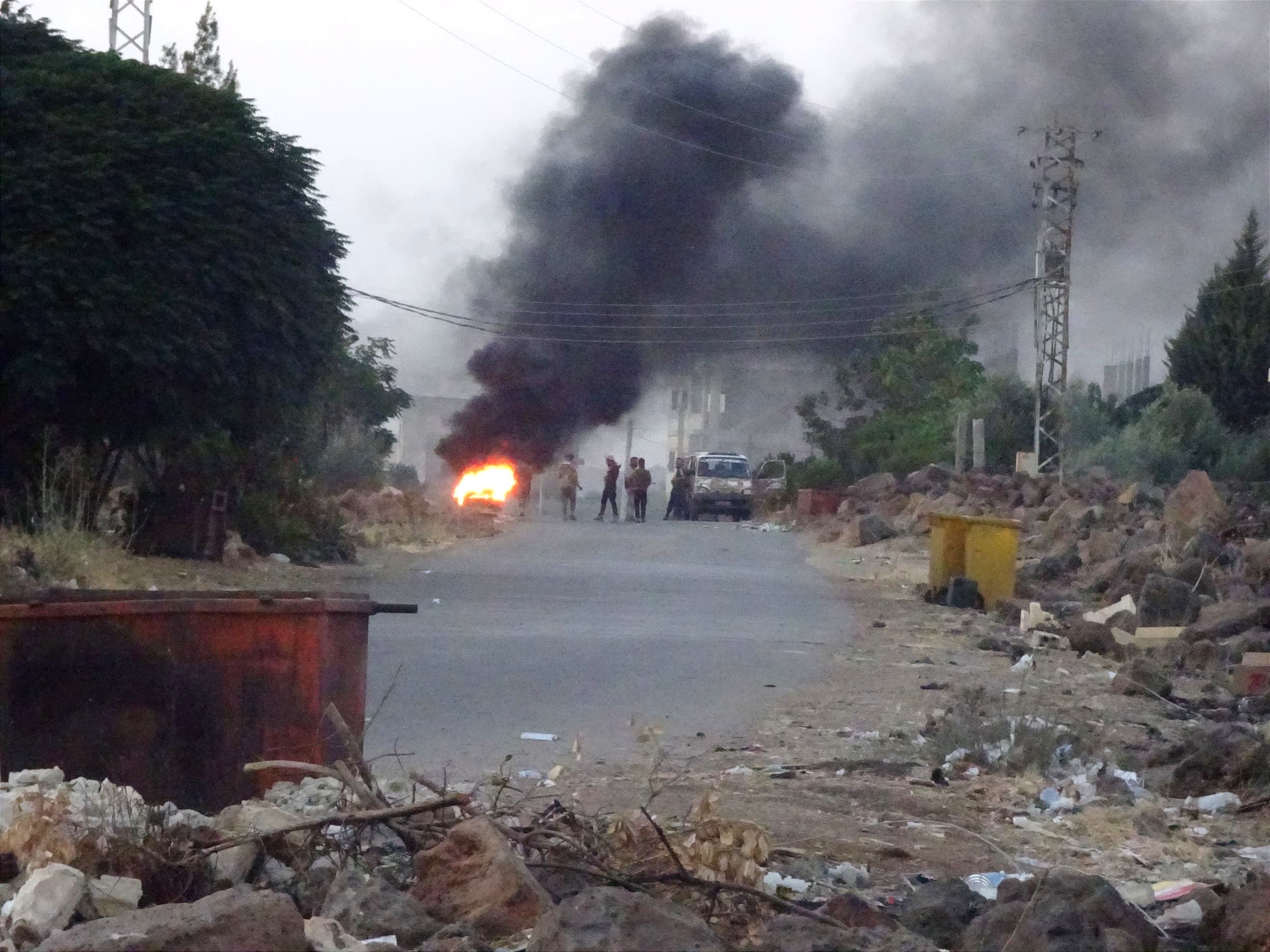
Road blocked by pro-Damascus fighters.
From Local Dispute to Regional Battlefield
Since 2011, Suwayda had stood out as an exception in the Syrian war. Predominantly Druze, much of the province refused both to join the armed opposition and to rally behind regime militias. Under the leadership of Sheikh Wahid al-Balous and his movement Men of Dignity, nearly 50,000 young men escaped forced conscription. This “third way,” based on local defense, shielded the community from ISIS attacks without falling under Damascus’ grip or joining the rebels. The assassination of al-Balous in 2015, widely attributed to regime services, marked a turning point and exposed the fragility of this autonomy.
When Ahmad al-Shara’ came to power at the end of 2024, he promised a “multi-colored Syria,” emphasizing the integration of all communities—including the Druze, who possess a strong identity, influential leaders, and armed factions that could not be ignored. Damascus pledged to include Druze leaders in local governance and the army, appointed a Druze woman as provincial governor, and initiated joint operations integrating Druze factions with General Security forces.
However, by April, clashes erupted in Druze suburbs of Damascus after a fabricated recording insulting the Prophet, falsely attributed to a Druze cleric. The scandal quickly escalated into riots at Homs University, where students incited attacks on Druze, Alawite, and Kurdish peers, while the government failed to intervene.
Fueled by online sectarian slogans such as “We Want to Annihilate the Druze,” Islamist factions and Bedouin fighters from Deir ez-Zor, Deraa, and Eastern Ghouta launched coordinated assaults on Druze towns outside Damascus. A relief convoy from Suwayda was ambushed, leaving forty dead, while ten Druze villages came under attack. General Security forces initially sealed off the area but, after fierce resistance, conceded to a compromise that left only local police in place—producing a fragile and uneasy stalemate.
The political and psychological consequences of this sectarian clash were profound. Villagers returned to burned homes and desecrated sanctuaries. Many Druze students fled Damascus and Homs. Most significantly, Bedouin armed men established a checkpoint on the Suwayda-Damascus’s main road near al-Masmiyeh, unchallenged by the state—a clear sign of their growing territorial, military, and symbolic control.
By July, a parallel conflict erupted in Suwayda itself, setting Druze against Bedouins. The roots of this historical rivalry run deep in the arid south, where Druze farmers and Bedouin herders have long clashed over scarce farmland and pastures. As early as 2000, one such confrontation left several hundred dead. “At its core this is not a religious conflict, but a struggle over land and resources,” notes political scientist Thomas Pierret. Yet in the turmoil of post-Assad Syria, this old antagonism has reignited with the participation of both the state and external powers, transforming it into a broader regional war.
Bedouins make up around 35,000 of Suwayda’s 700,000 inhabitants. Long marginalized under Assad and often deployed in fragmented fashion for local military control, they have taken on a new role since HTS’s rise to power. Shara’ has increasingly drawn on Bedouin identity, mobilizing their Arab and Sunni affiliations while extending the wartime networks he had already built. At the same time, several Bedouin tribes sought to demonstrate loyalty by joining military operations, supporting security and defense forces, and providing large numbers of fighters. This dynamic of empowerment and weaponization soon reached Suwayda itself, crystallizing at the al-Masmiyeh checkpoint established in the wake of the April clashes.
Some tribes proved particularly strategic, such as the al-Marasma of Deir ez-Zor, who were deeply involved in smuggling activities—especially tobacco—through their cross-border networks, while also supplying men and support to the Iranian Revolutionary Guard and affiliated militias in the region. The tribe’s leader, Farhan al-Marsoumi, has since been co-opted by Shara’s government, and his men took part in the atrocities committed in Suwayda last July.
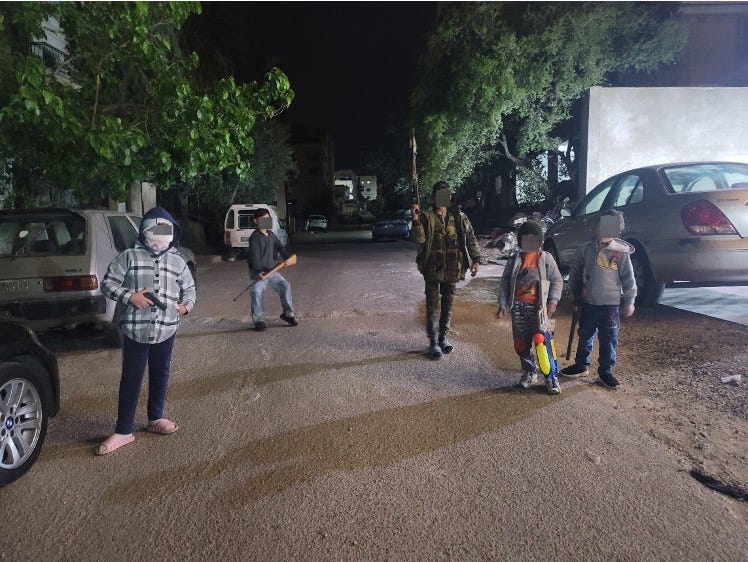
A checkpoint in one of Suwayda’s neighborhoods, held by Druze residents. This photograph was taken while passing through a street after being stranded in Suwayda due to road closures during the first events in April.
As the alley was entered, children emerged from their hiding places carrying toy guns. They tried to make an arrest, but quickly realized there was nowhere to take the detainee, and settled instead for confiscating three biscuits, which they divided equally among themselves. The children were imitating what they heard from their elders and were frightened by distant clashes.
When I asked why they had set up the checkpoint, they replied: “We want to confront the terrorists who infiltrate our neighborhoods.”
The fate of this makeshift checkpoint after the July assault is unknown, but the area was destroyed.
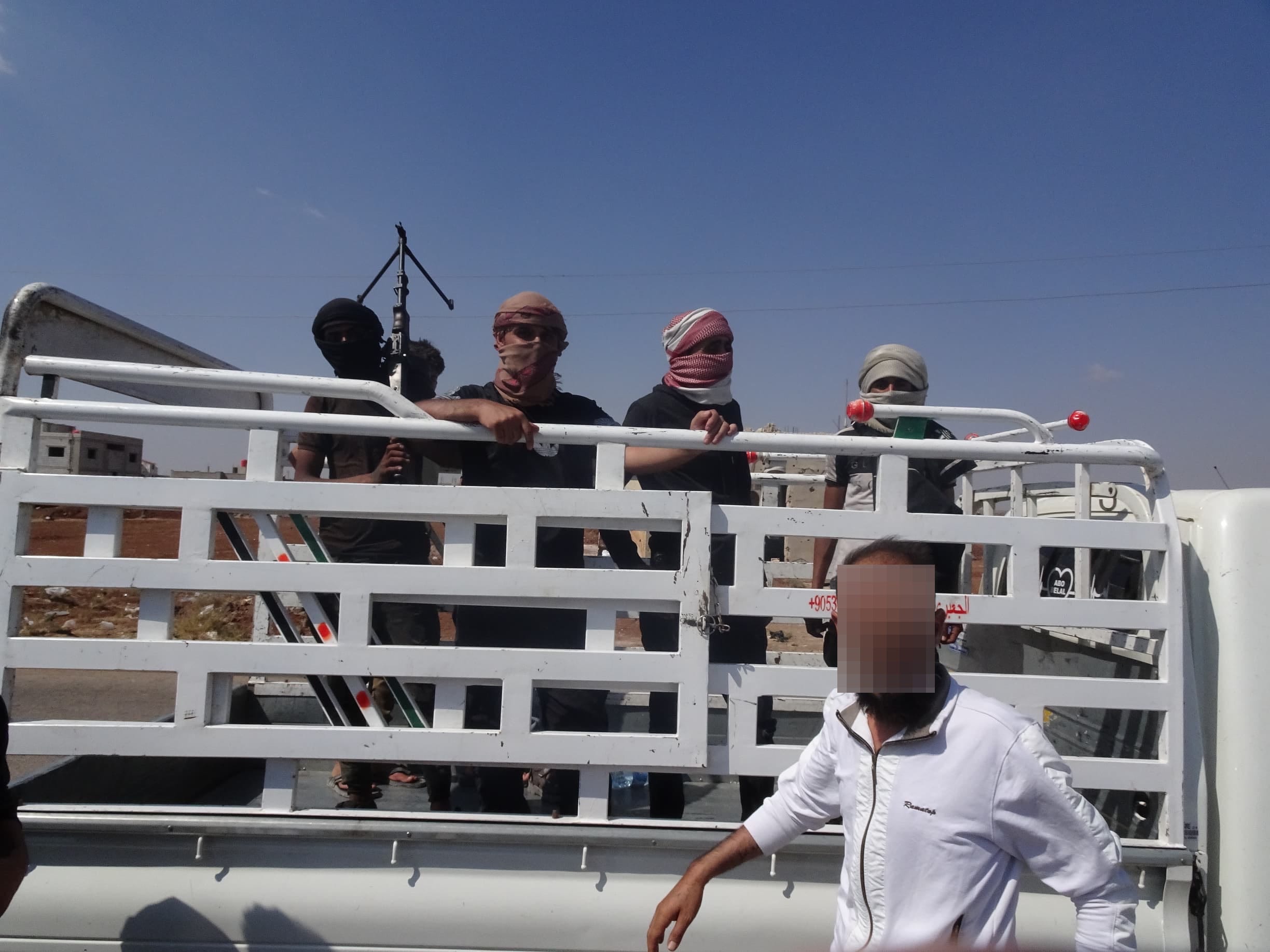
On the other side of Suwayda, I entered abandoned villages together with tribal forces and General Security — villages now controlled by General Security and forces loyal to the new administration in Damascus (after the July assault). These villages are completely deserted; their residents fled into the city of Suwayda.
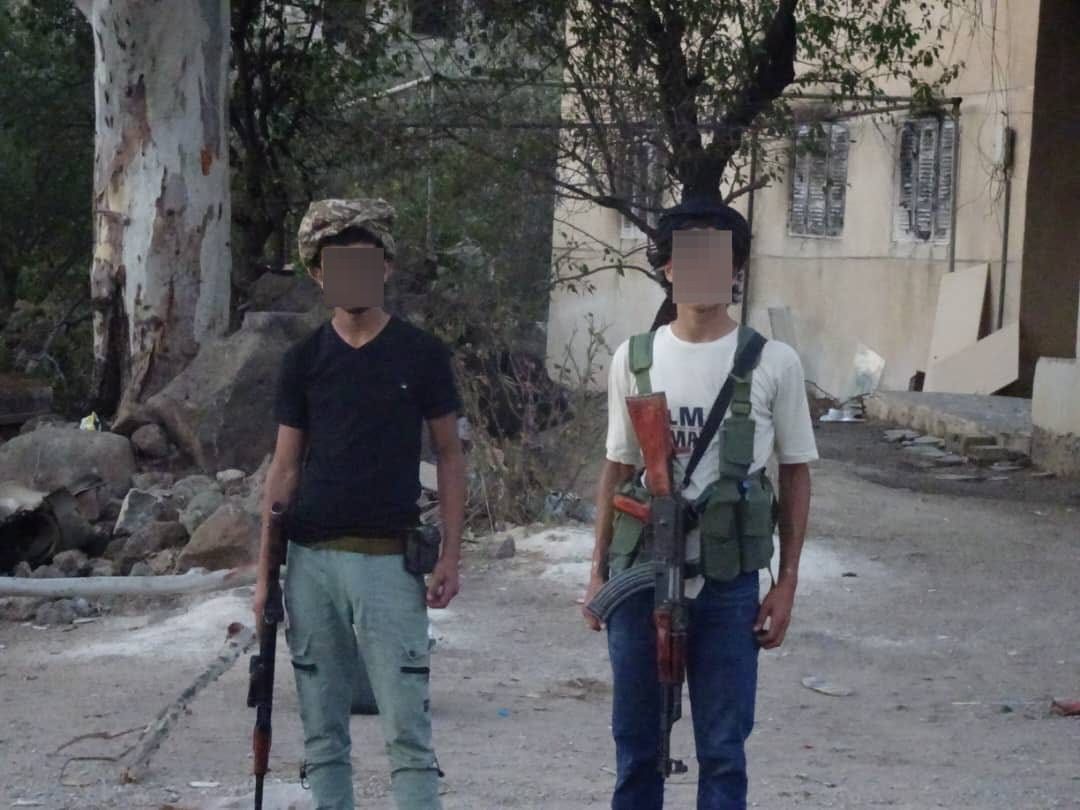
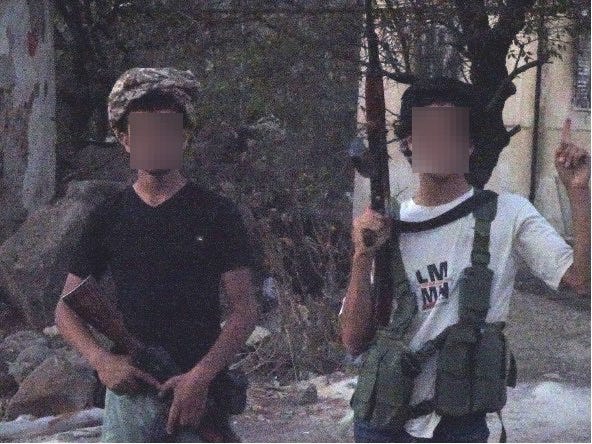
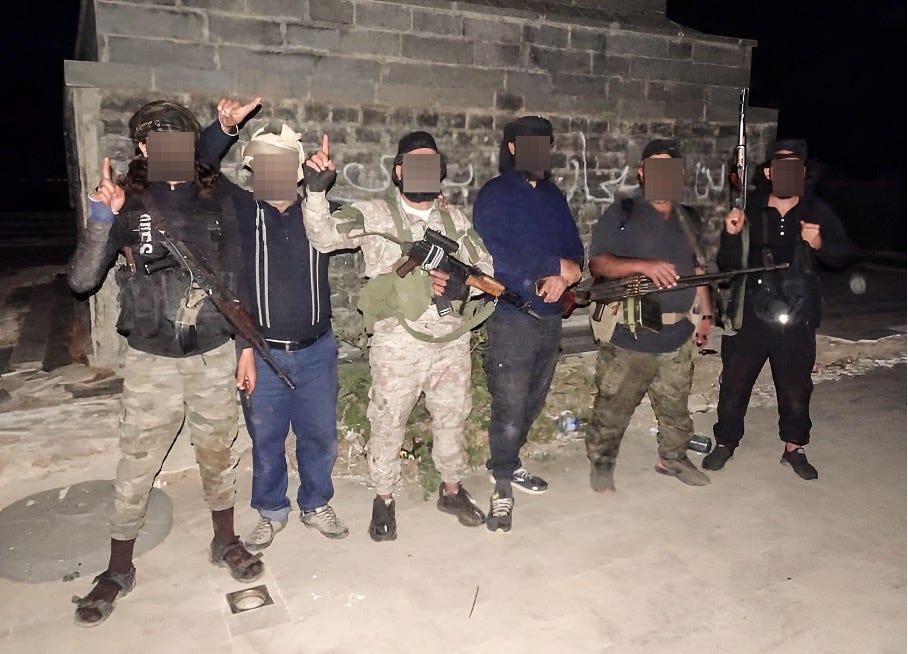
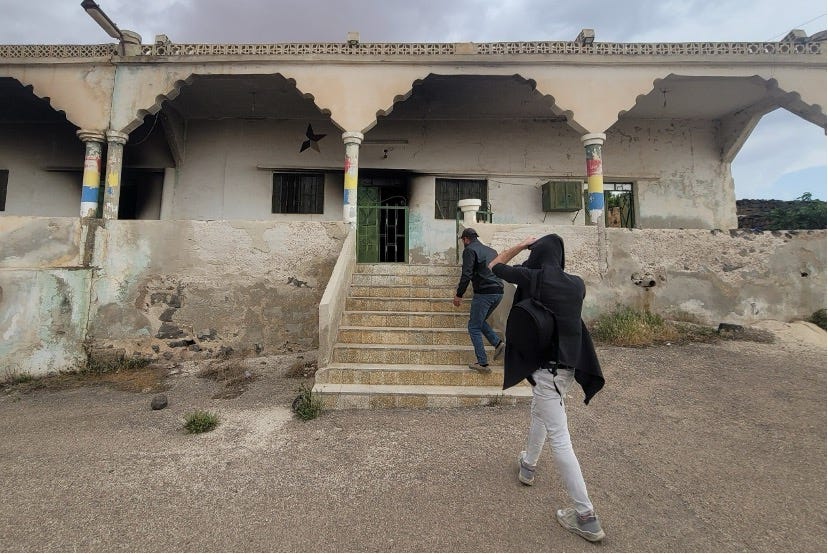
I took this photograph of two young men fighting in the ranks of the pro-Damascus forces.
When I asked them why they came to this burned and abandoned village, they said: “We came for jihad.” I asked: “In the name of what?” They answered: “Islam.” I asked: “And how does Islam prevail by fighting in a burned village whose people were robbed and displaced?”
They had no answers except familiar, pre-prepared ones — likely inherited from an older generation — reflecting stereotyping and preconceived judgments. As I passed them to continue my way, the young man in black fired two shots into the air — a salute or a threat, I could not tell. He smiled from afar and waved at me.
In these two images, the future generations shaped by the war become visible. Under different circumstances, the people shown here might have been friends.
It was at the al-Masmiyeh checkpoint, on July 11, 2025, that everything unraveled. That evening, a Druze fruit and vegetable merchant, Fadlallah Naeem Dwara, was stopped by men of the Bedouin al-Nu’aim tribe. Abducted, stripped of his truck and cargo (five tons of produce, worth seven million Syrian pounds, along with his phone), tortured, and dumped on the roadside, he became the symbol of chronic insecurity on the Damascus–Suwayda highway. While the area had long been plagued by banditry, this incident triggered unprecedented escalation.
In retaliation, young men from Dwara’s village, supported by a Druze faction, abducted several Bedouins. The cycle of vengeance quickly escalated: cross-kidnappings, targeted killings, armed clashes. Appeals for restraint from Druze religious leaders failed to calm the anger. Violence spread even further into mixed neighborhoods and neighboring Druze villages, with abductions multiplying.
By mid-July, the conflict had taken on a regional dimension. Thousands of fighters from Deir ez-Zor, Aleppo, and Deraa joined in a faza‘a—a wartime call for tribal solidarity—mobilized against the Druze with the support of the transitional government’s Interior and Defense Ministries. The army encircled Suwayda and cut its supply lines. Israeli airstrikes soon followed, striking positions around the city. These strikes inflamed anti-Druze propaganda, reinforced the narrative of Sunni victimhood, and fueled atrocities—while serving Israel’s own expansionist agenda in Syria and accelerating the sympathy of many Druze toward Israel as a supposed “protective state”.
In this psychological and information war, massive disinformation fanned the flames. Fake images of massacred Bedouins circulated online, fueling tribal mobilization. More and more Bedouin, and even Kurdish, and Turkmen tribes rallied in solidarity, in a pan-tribal and pan-Sunni gesture.
Although the authorities circulated talking points portraying the violence as the work of gangs loyal to the Druze Sheikh Hijri, and uncontrolled bedouin elements, shadowy Israeli influence, or remnants of the Assad regime, genocidal and racist rhetoric began to intensify across social networks and among pro-Damascus fighters on the ground. Altair’s field reporting, based on interviews with security personnel and Bedouin fighters, reveals a strong overlap between armed groups and the spread of ultra-sectarian discourse among frontline fighters.
For example, Abu Mohammad, [names have been changed], a member of the Defense forces from Deir ez-Zor, accompanied by eight men, stated: “My friends—and many other mujahideen—when the army withdrew from Suwayda under the ceasefire agreement, we took off our uniforms and joined the tribes in their attack on Suwayda, supplying them with weapons and ammunition. When we fight the Druze, we are fighting Israel, because they are traitors and infidels. So why would we ever stop fighting them under any circumstances?”
Abu Hudhayfa, a Bedouin fighter in his forties, stated: “The Druze are a deeply evil lineage. At night, they turn into monsters with fangs, tails, and horns like calves. That is why we never attack them at night—we wait until dawn prayer and then strike. We have found footprints and bones on their lands that prove their transformation.”
Two child soldiers, aged roughly 14 and 16, from Deir ez-Zor tribes, bore violent nicknames Abu Mawt (“Father of Death”) and Abu ʿAdhab (“Father of Torment”), said: “The Druze are infidels. They pretend to be Muslims, but they are not. They do not pray, their women do not wear the hijab, and they marry their own brothers and sisters. As Muslims, we must either kill them all or at least expel them from our lands.”
Calls for eradication soon turned into scenes of horror: villages bombarded and burned, summary executions, disappearances, and attacks on hospitals. Suwayda’s streets were littered with corpses, entire families massacred, raising bacteriological risks.
As the siege drags on, the government insists it is providing flour, fuel, and water. Yet, as al-Jumhuriya Media reports, the province’s daily needs remain largely unmet. Fuel stations are deserted, and Suwayda has been without stable electricity since clashes broke out in mid-July — with power returning only sporadically amid repeated attacks on supply lines. Internet service has faced frequent disruptions, often pointing to centralized shutdowns. Hospitals, meanwhile, are running critically low on cancer treatments and essential medicines for chronic illnesses…
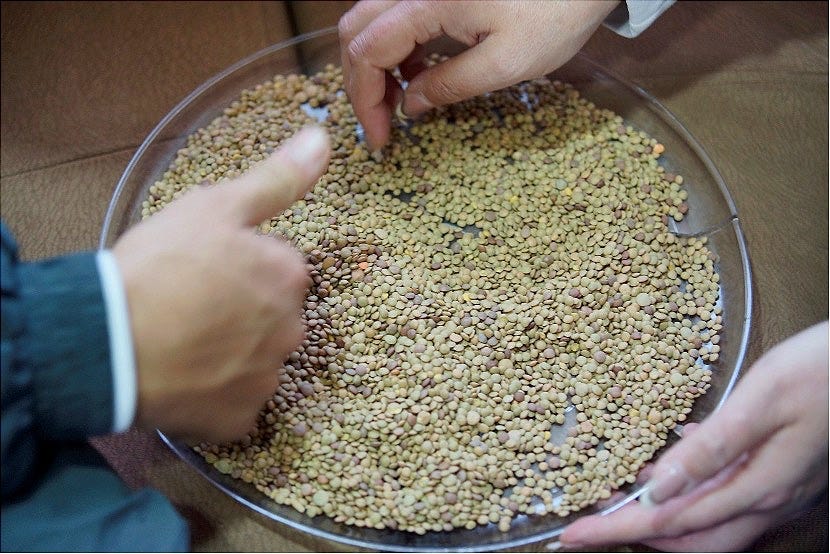
A family in Suwayda cleaning lentils of impurities during the food siege imposed on the city.
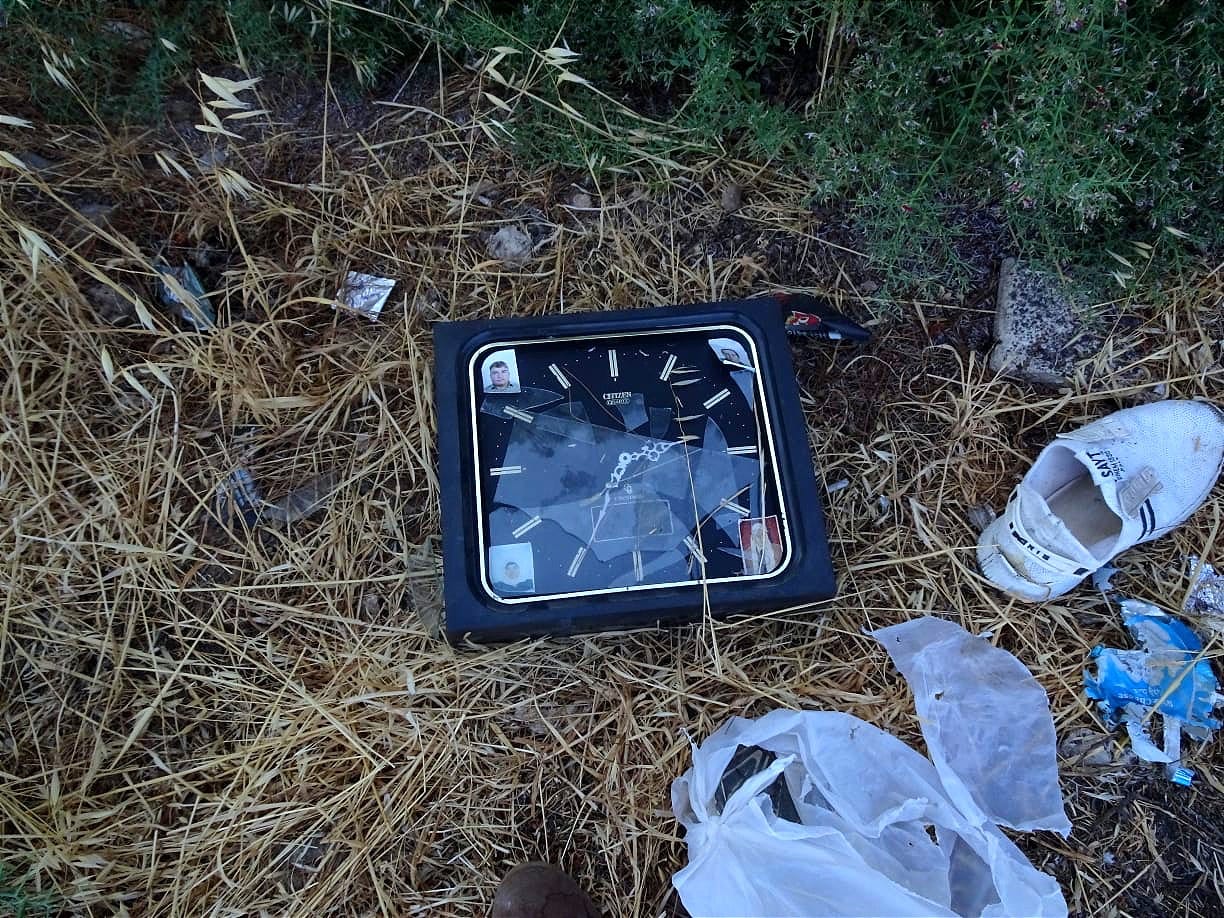
This clock stopped working when one of the attackers smashed it in a modest rural house in western Suwayda. Time stopped with it. On the clock are three family photos, and a fourth of Sultan al-Atrash — leader of the Great Syrian Revolt against French occupation and a symbol of Syrian unity.
The Mechanisms of “Delegated Violence”
Since December 2024, the new Syrian army has remained deeply fragmented. The dismantling of Assad’s military, the incorporation of entire units once loyal to HTS—still following their emirs—and the dominance of veteran jihadist officers, some of them foreign, each imposing their own vision of warfare, have prevented the emergence of a unified chain of command. Israeli airstrikes, which destroyed part of its armor and military infrastructure, further weakened its technical capacities.
Facing a shortage of manpower, the Transitional Administration turned to a “low-cost” instrument of war: outsourcing military and security authority to Bedouin tribes, abundant in fighters and able to move swiftly across control lines.
The process began in late April, after clashes between Islamist/Bedouin armed groups and Druze factions in the outskirts of Damascus. In the aftermath, tribal forces part of the al-Nu’aim confederation, aligned with General Security, established a checkpoint on the Damascus–Suwayda road. Officially, it was presented as a measure to contain sectarian unrest. In reality, the checkpoint quickly turned into an instrument of collective control and humiliation: extortion, harassment, arbitrary shootings at travelers, and prolonged road blockages. These practices deepened shortages of food, fuel, and medicine in Suwayda, stoked intercommunal tensions, and ultimately became the trigger of the July conflict.
A burned house.
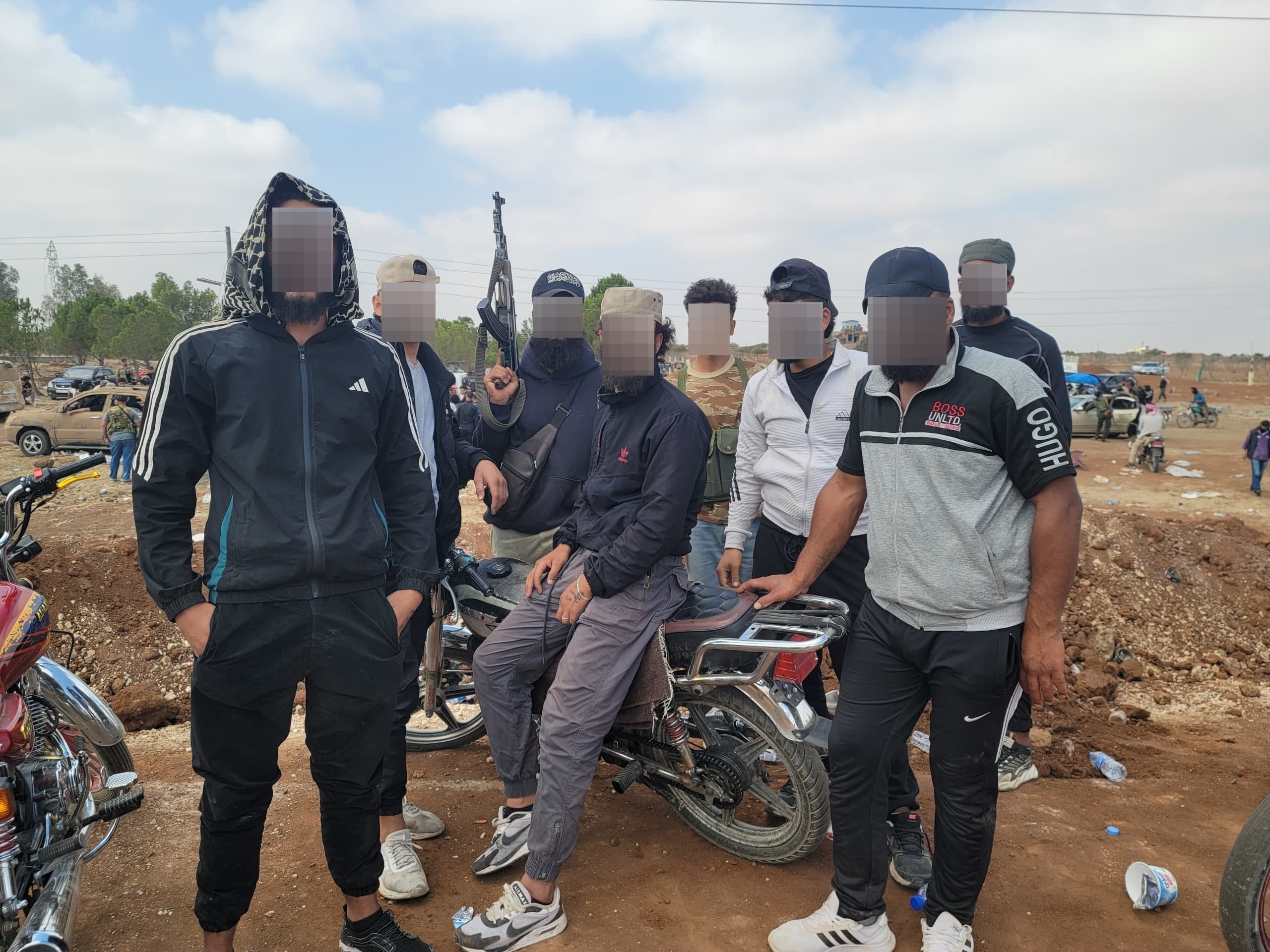
Bedouin fighters posing before heading to the front.
It is important to note that behind the massive pan-tribal faza’a in July, not all tribes joined the movement. For example, many tribes affiliated with the Syrian Democratic Forces and the northeastern Syrian government, dominated by the PYD Kurds, remained inactive. The uprising primarily involved the Uqaydat and Nu‘aim tribes, both from Deir ez-Zor and with no historical ties to Suwayda.
Their involvement was facilitated through the direct integration of tribal leaders into the security apparatus, with an acceleration from April onward. Hussein al-Salameh, from the Uqaydat, was appointed head of Transitional Intelligence, Amer Names al-‘Ali, chairman of the Central Control and Inspection Authority (anti-corruption), Sheikh Rami Shahir al-Saleh al-Dosh, head of the Supreme Council of Tribes and Clans, and high-ranking HTS figures now highly influential in government, such as Yussef al-Hajr—all originating from the small town of al-Shuhayl (population under 15,000) in Deir ez-Zor.
This system of cooptation, in which tribal sheikhs and notables receive weapons, privileges, and near-total impunity in exchange for loyalty and occasional mobilization against designated “enemies,” resembles a form of feudalism, as highlighted by the media Fajawat. For Damascus’ regional backers—Turkey, Qatar, and Saudi Arabia—the arrangement serves a dual purpose: undermining federalist or autonomist claims (Kurdish, Druze, even Alawite) while reactivating tribal structures as conduits of central power.
Such “governance by delegation” grants armed tribes de facto autonomy, beyond any institutional accountability. Looting, summary executions, the destruction of vital infrastructure (water, electricity, agriculture), and the normalization of racist and sectarian dehumanization—filmed humiliations, ritual executions—have become its direct consequences, alongside massive population displacements.
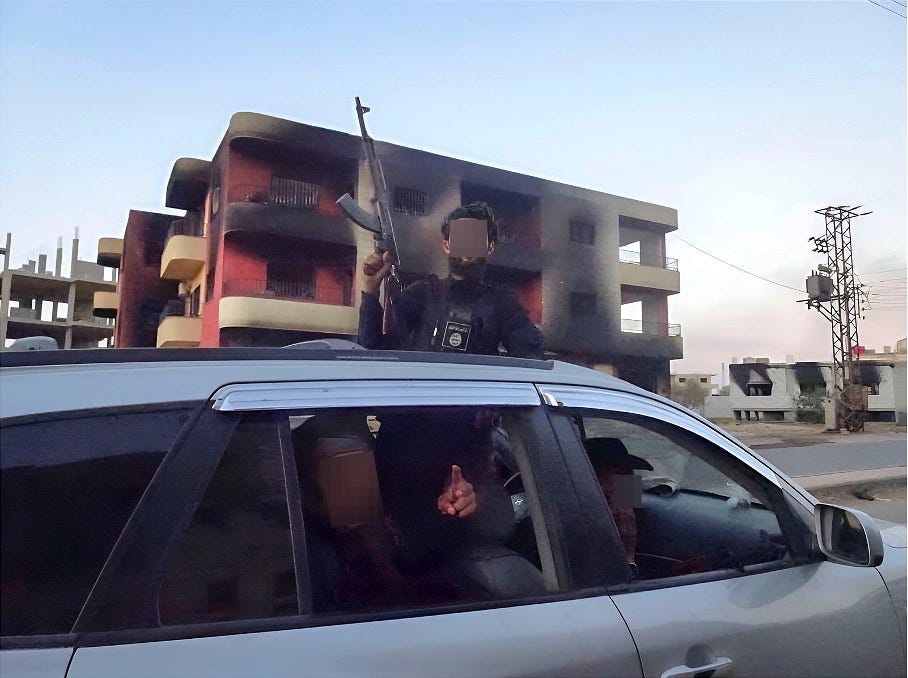
A Bedouin fighter with a patch resembling the ISIS flag.
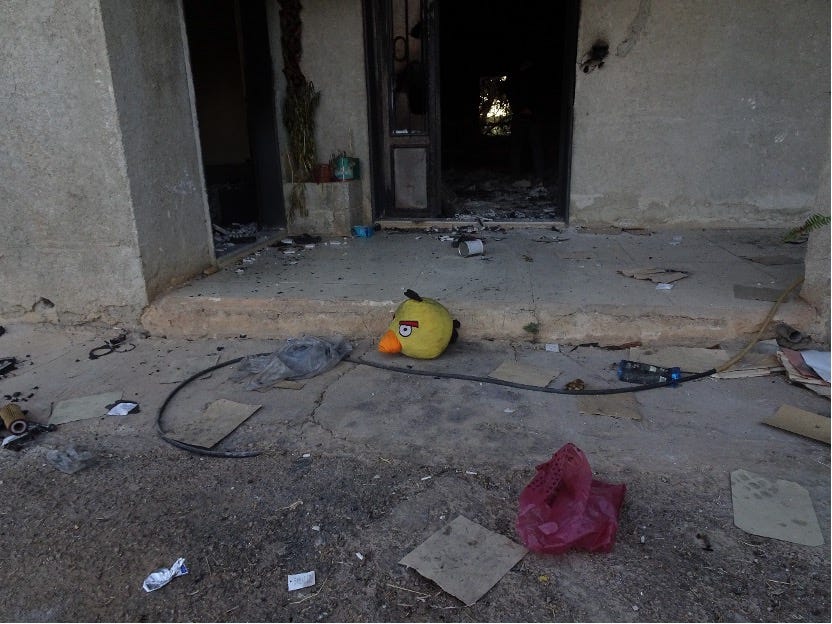
This photograph was taken in one of the burned villages in Suwayda that I entered with Damascus forces and tribal reinforcements. One of them sarcastically said: “Angry Birds did this,” referring to who burned the house.
Suwayda embodies this process. Even after repelling the twin Salafist jihadi and tribal offensives, the province remains besieged, devastated, and estranged from the rest of Syria’s political body. These violences continue a genealogy of brutality already shaped under Assad. It remains to be seen whether this represents a deliberate strategy implemented by Shara’, with the support of his advisors in power, or simply an increase in pressure from tribal leaders due to their involvement in military operations and their provision of manpower.
Parallel to the resurgence of tribalism and the delegation of power to Bedouin forces, another phenomenon has emerged: the radicalization of segments of the Sunni youth. Many young men who did not take part in the 2011 revolution but grew up in the war years now cultivate a political imagination steeped in resentment and a thirst for revenge. Much like Assad’s shabiha (pro-Assad paramilitary gangs) they flood social media with sectarian content and calls to defend an ethno-confessional identity perceived as under existential threat.
As the media outlet Fajawat illustrates, this paranoid atmosphere elevates Ahmad al-Shara’ to a messianic figure while excluding other communities from the anti-Assad revolution. In an interview, Yassin Haj Saleh observes that the uprising is increasingly reinterpreted through mystical discourses about the return of the Umayyads, promoted by Salafi preachers who turn the memory of Sunni persecution into a narrative of victimhood(One fighter from the new Syrian army explained: « They think they are superior to us, especially the educated ones, the university graduates. Back when we worked in their fields, we always felt their disdain. Now we will seize all their lands and we’ll see how they respond to that »), but also supremacy, thereby justifying the establishment of a new order. On the ground, this translates into young Bedouins scrawling tribal graffiti after looting houses, attempting to “reclaim” space in a symbolic fusion of violence, religion, and tribal belonging.
Al-Soura al-Kabira village in Suwayda, and its burned council — a house of worship for the Druze community — burned after the village was assaulted by forces loyal to the new administration in Damascus.
The cost of neglect: eroding social cohesion and civic identity, reliving Assad era
The country’s feudalization has deepened the erosion of social cohesion and civic identity, dragging Syria back into patterns reminiscent of the Assad years. As Fajawat Media observed:
“After decades of intellectual regression and depoliticization under the whip of Ba’athist national socialism, Syria has gradually reverted to its tribal and feudal reflexes. In this fertile ground, the Islamist model — rejecting secularism, democracy, and popular representation — once again gives free rein to family chiefs, sheikhs, warlords, and emirs. Their legitimacy depends solely on their ability to impose a balance of power and prove loyalty to the ruling center.”
The rise of Ahmad al-Shara’ epitomizes this logic: legitimacy no longer stems from representation but from strength. Those who demonstrate military capacity and loyalty are rewarded — such as factional leaders who folded their forces into the national army, or the Uqaydat confederation, which joined Damascus’ campaign against Suwayda only to withdraw later in exchange for political concessions.
This dynamic has hollowed out what remained of the national project. The National Conference, which had promised to lay the foundations of a renewed political order, proved disorganized and empty. The new government has been more concerned with reconnecting Syria to international markets than with cultivating a genuine political life. The collapse of any shared “Syrian” identity was starkly illustrated during the July massacres: an elderly man, held at gunpoint in Suwayda, replied “I am Syrian, brother” when fighters demanded his identity. One retorted: “What does Syrian mean? Muslim or Druze?” When the man answered, “I am Druze,” three fighters opened fire. “This is the fate of every dog among you, you pigs,”another shouted.
A photograph recovered from the burned countryside of western Suwayda, taken from a wedding album belonging to someone who believed his home was safe enough to preserve his memories.
In the background behind the newlyweds stands a monument commemorating the Battle of al-Mazraa—the first battle in which Syrian rebels defeated the French. The villagers took great pride in this victory, enough to include it in their wedding albums.
I do not think they ever imagined their losing battle would be against fellow Syrians.
Such scenes feed trauma and perpetuate cycles of vengeance. One Druze family Altair interviewed, released after being kidnapped, recalled: “Two tribal fighters, about sixteen years old, stormed our house. They insulted us and forced us into their emir’s car. At a gas station, fighters wearing shahada patches — like ISIS — wanted to kill us. We were kept alive only as bargaining chips for prisoner exchanges.” His wife described further abuses: “Public Security forced women to face the wall. They dragged aside a young woman, no older than 20, and began sexually assaulting her while her mother and nieces screamed. When the grandmother tried to intervene, they beat her, pinned her down, and filmed the assault in degrading ways.” These testimonies highlight the layers of humiliation, sexual violence, and psychological terror inflicted on the most vulnerable, compounding Suwayda’s humanitarian catastrophe.
The early weeks after Assad’s fall seemed to herald renewal after one of the most brutal dictatorships of the modern era. Yet massacres on the coast, in Druze areas, and even in Damascus extinguished that hope. In July 2025, a video circulated showing peaceful activists assaulted by armed youths outside the People’s Assembly, a chilling echo of the shabiha’s thuggery under the old regime.
Civil society has been marginalized in this climate. In Suwayda, figures like Sheikh Hikmat al-Hijri, elevated to prominence since 2011, have monopolized local legitimacy, sidelining both the female provincial governor and grassroots organizations. At the same time, numerous self-defense groups have emerged, many aligned with the Suwayda Military Council, which advocates decentralization or even separatism — and, according to some observers, maintains tactical coordination with Israel.
Militia structures like the Men of Dignity, once willing to cooperate with Damascus, have hardened their stance, joining the “National Guard” under Hijri’s command. For the first time, the three leading Druze sheikhs (Hijri, Hinnawi, and Jerbo’) jointly disavowed Damascus, with Hijri openly calling for separation. The divorce between Suwayda and the capital is now complete while militarization of the margin continues.
Meanwhile, Shara’ has announced the launch of a new electoral system for the People’s Assembly. Rather than opening space for genuine representation, it appears designed to consolidate his own nominations and further concentrate power. One-third of the parliament—70 members—will be directly appointed by Shara’, while the remaining 140 will be selected by a supreme committee established by him. Elections will not be held in Raqqa, Hassaka, or Suwayda.
Equally alarming is the opacity and lack of systematic organization in transitional justice. While some perpetrators have been arrested and publicly confronted with their victims others have been granted amnesty unexpectedly. There are currently no credible mechanisms for accountability, which undermines the prospects of achieving justice for crimes committed not only by the former regime but also by its tribal proxies and other armed factions. Without a comprehensive approach to transitional justice across all levels of Syrian society, sustainable peace remains unattainable. In this process, civil society cannot remain a bystander, it must emerge as the principal actor, capable of redefining civic identity beyond feudal loyalties, sectarian reflexes, and militarized authoritarianism.
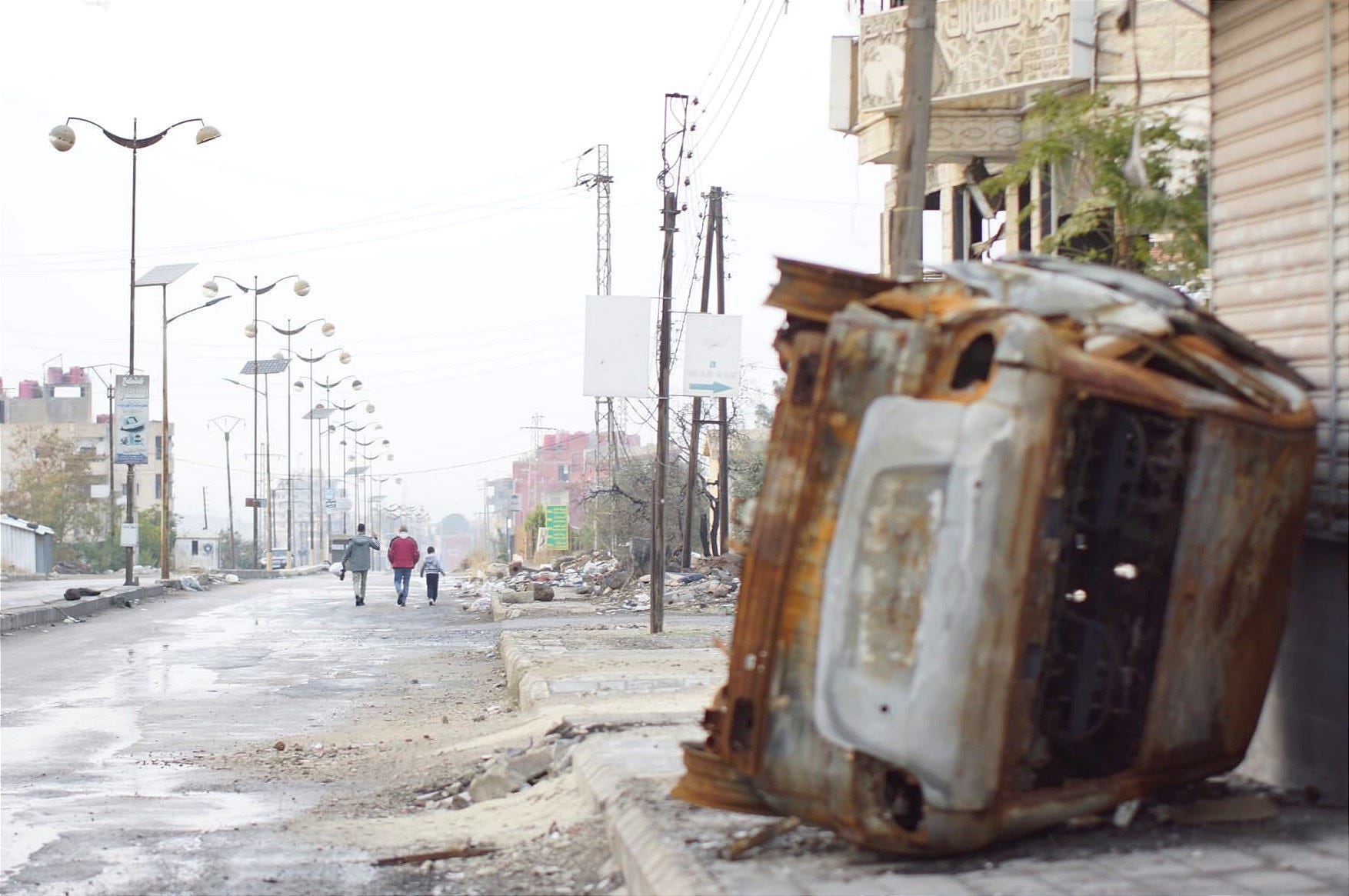
Scenes from daily life in the city of Suwayda after the July assault.
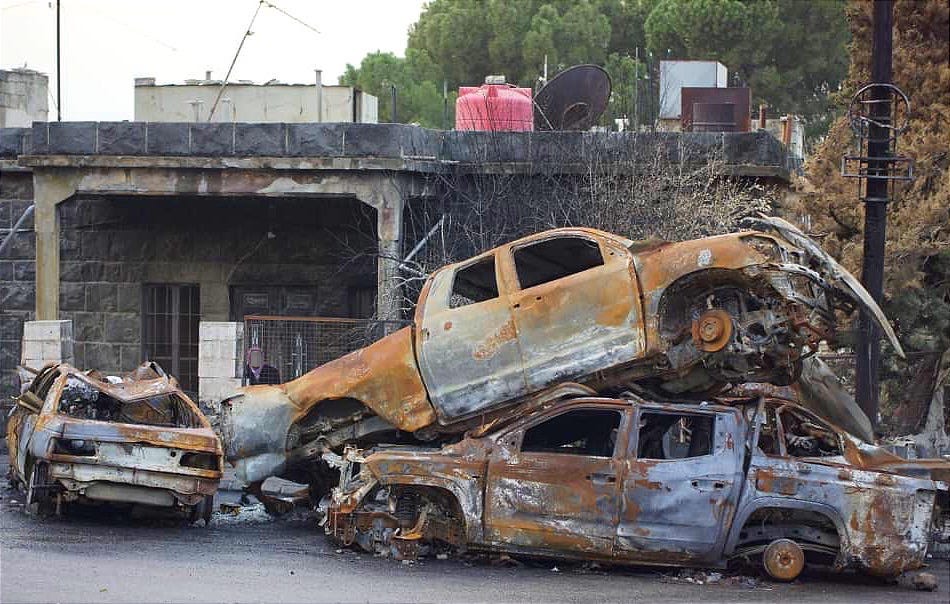
An elderly man blocked the door of his burned house with destroyed cars, still living there alone. When I asked him why, he replied: “Where would I go?” I felt deeply ashamed afterward.
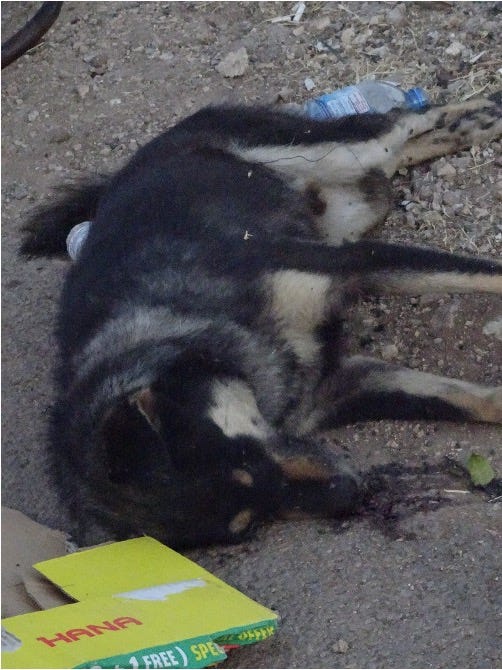
A scene from the western countryside of Suwayda after the July assault. Many household dogs were killed after attempting to defend their homes, attacking the assailants as if their teeth could protect against the violence of guns.